You see Chihuly chandeliers as masterpieces created through glassblowing, careful handcrafting, and precise assembly. Artists shape molten glass into unique pieces, then assemble them with skill and teamwork. Each chandelier stands out for its vibrant colors, intricate forms, and the collaboration behind its creation. You witness true artistry in every finished piece.
Key Takeaways
-
Chihuly chandeliers are unique masterpieces made from hand-blown glass, showcasing vibrant colors and intricate designs.
-
Glassblowing involves techniques like blowing, fusing, and annealing, which help create stunning shapes and ensure durability.
-
Teamwork is essential in the creation process, with designers, glassblowers, and engineers collaborating to bring each chandelier to life.
-
Customization options allow you to choose sizes and colors, making each chandelier a perfect fit for your space.
-
Proper care and maintenance, like gentle cleaning and regular checks, keep your chandelier looking beautiful for years.
Glassblowing Techniques
How Glassblowing Works
You see glassblowing as a process where artists shape molten glass into beautiful forms. This art uses several main techniques, each with its own purpose. The table below shows what these techniques are and how they help create stunning pieces for Chihuly chandeliers:
| Technique |
Description |
|---|---|
| Blown Glass |
Blowing hot glass into shapes, key for Chihuly's works. |
| Fusing |
Melting glass pieces together for unique colors and textures. |
| Slumping |
Shaping glass into curves by heating it in a kiln for cool designs. |
| Sandblasting |
Adding texture to glass surfaces to make them look better. |
| Experimental Techniques |
Using creative methods, like heat-resistant fabrics for molds and mixing glass with other materials. |
You can follow these steps to understand what happens during traditional glassblowing for chandelier parts:
-
Preparation of Materials: Artists mix silica sand, soda ash, and limestone, then heat them to make molten glass.
-
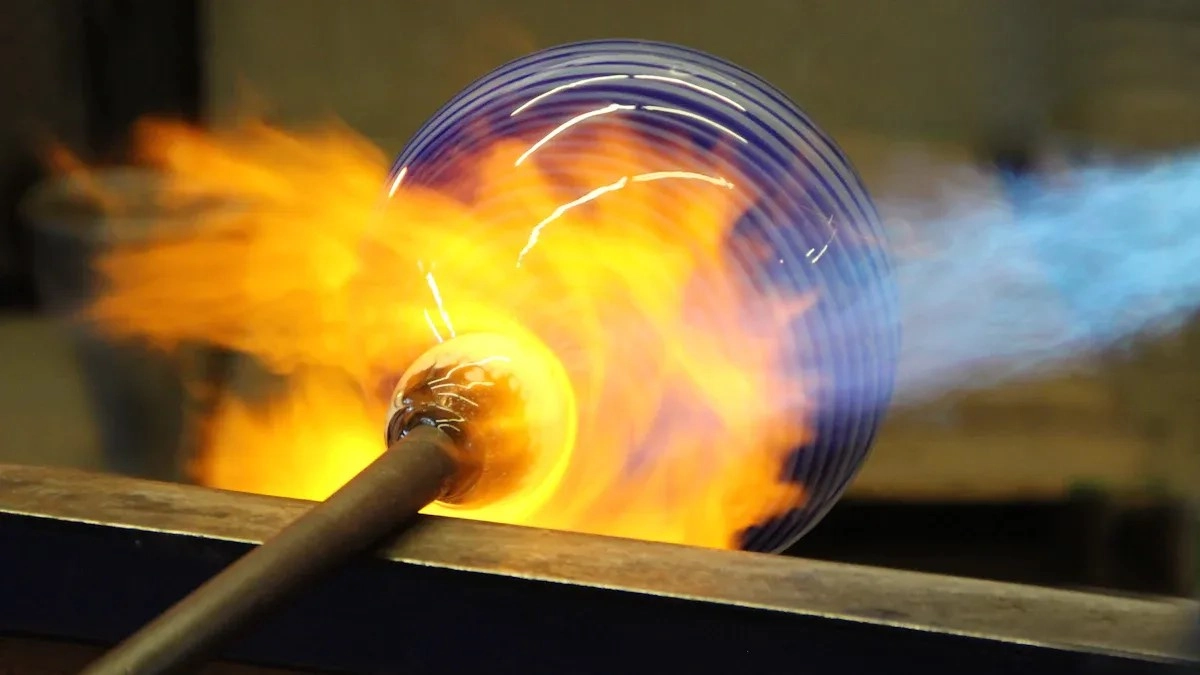
Shaping the Glass: The artist gathers the molten glass on a blowpipe, rotates it, and uses tools to form edges and curves.
-
Maintaining Temperature: The glass goes back into a special furnace, called a glory hole, to keep it soft and workable.
-
Annealing: The shaped glass cools slowly in a kiln, which helps prevent cracks and keeps the piece strong.
Chihuly’s Artistic Methods
You notice that Chihuly’s artistic methods stand out from traditional glass art. His chandeliers show what happens when you break the rules of symmetry and embrace irregular shapes. Here are some features that make his work unique:
-
Chihuly chandeliers have asymmetry and irregularity, which makes each one different.
-
The designs combine large-scale sculpture with glass art, creating a bold statement.
-
Each chandelier interacts with its surroundings, using vivid colors and complex forms to catch your eye.
-
The design process stays organic and spontaneous, so each installation can change and grow during assembly.
You see that skilled artisans blow glass into unique shapes, using vibrant colors to create dynamic chandeliers. The intricate designs become the focal point of any space. Chihuly’s famous series, like Cylinders, Baskets, Seaforms, and Chandeliers, all show his love for color and form. When you look at these works, you understand what makes Chihuly chandeliers so special.
Chihuly Chandeliers: Materials & Tools
Types of Glass and Colors
You see that Chihuly chandeliers use Murano-style glass, known for its clarity and vibrant colors. Artists select glass with special qualities to create dramatic effects. The Blue Chihuly Style Murano Glass Chandelier from Remshep shows how ombré coloring transforms a piece. You notice the blue to clear ombré effect creates a calm and inviting atmosphere. This chandelier uses 65% blue to clear glass and 35% clear glass. Light passes through these shades, enhancing the ombré effect and adding depth. Pairing ombré glass with warm-toned bulbs changes the mood and highlights the gradient. You find that each chandelier becomes unique because artists mix colors and shapes.
-
Murano-style glass offers clarity and strength.
-
Ombré coloring uses gradual transitions between shades.
-
Combining blue and clear glass lets light create special effects.
-
Warm-toned bulbs enhance the gradient and ambiance.
Tools for Shaping and Blowing
You discover that artists use both traditional and modern tools to shape glass for Chihuly chandeliers. Tools help create precise forms and allow for customization. The table below shows what tools and technologies improve the process:
| Tool/Technology |
Contribution to Glassblowing |
|---|---|
| CAD |
Enhances design precision and customization |
| 3D Printing |
Allows for complex shapes and structures |
| LED Integration |
Improves lighting and visual effects in chandeliers |
| Smart Glass |
Offers innovative features for chandelier functionality |
| AR Design |
Facilitates interactive design processes |
You see that LED bulbs are a modern enhancement. They provide warm light and can change colors, making the chandelier more versatile.
Metal Armature and Structure
You observe that Chihuly chandeliers consist of many individual blown glass elements. Artists combine these pieces to form elaborate compositions. Each glass piece is hand-wired to a metal armature skeleton. The design often features complex twists and coils. You find that a single chandelier can include hundreds or thousands of glass pieces.
-
Metal armature supports the glass elements.
-
Rust-proof plating protects the metal frame from corrosion.
-
Electroplated finishes keep the structure strong and beautiful.
| Feature |
Description |
|---|---|
| Plating Process |
Rust-Proof |
| Metal Frame |
Electroplated, Rust-Resistant Finish |
| Benefits |
Prevents corrosion and rust |
You see that these materials and tools make each chandelier durable and stunning. Artists use careful planning and modern enhancements to create pieces that last.
Making Chihuly Chandeliers
Design and Planning
You start the process of making Chihuly chandeliers with careful design and planning. Artists and engineers work together to create a safe and beautiful chandelier. You see that each chandelier needs a strong metal armature for support. This armature must be anchored securely to the ceiling. Before you begin, an engineer checks the ceiling structure to make sure it can hold the weight and stay balanced. Experts also help with rigging and structural integrity.
-
You consult with experts for rigging and safety.
-
You design a metal armature to support the glass.
-
You ask an engineer to check the ceiling for strength and balance.
You can choose custom sizes and colors for your chandelier. Brands like Remshep offer these options, so you can match your chandelier to your space. You also receive detailed installation guides and video instructions to help you plan the setup.
Blowing and Shaping Pieces
You move to the glassblowing studio, where skilled artists create each glass piece by hand. You watch as they gather molten glass on a blowpipe and shape it using special tools. Artists twist, stretch, and form the glass into unique shapes. Each piece can look different, with curves, spikes, or swirls. For a single chandelier, you may need anywhere from 150 to 750 glass pieces.
You see that teamwork is important. Artists work together to keep the glass at the right temperature and shape it before it cools. They use color techniques, like ombré, to create beautiful effects. The Blue Chihuly Style Murano Glass Chandelier from Remshep uses a mix of blue and clear glass to make a striking ombré look.
Cooling and Annealing
You notice that after shaping, the glass pieces must cool slowly. This step is called annealing. The glass goes into a special oven called an annealer. The temperature drops very slowly, which keeps the glass from cracking or breaking. This careful cooling is important for large or thick pieces.
The annealing process removes tension inside the glass and makes it stronger. You can see how this process helps prevent defects and keeps the chandelier safe and beautiful.
| Annealing Cycle Duration |
Temperature Range |
Purpose |
|---|---|---|
| 2 to 4 hours |
520°C to room temperature |
Prevents internal structural strain and cracking |
-
Annealing removes tension and phase segregation in glass.
-
It ensures uniform cooling of both the exterior and interior of the glass.
-
This process helps prevent cracking and strengthens the glass.
Assembly and Installation
You prepare for assembly by carefully packing each glass piece to avoid damage during transport. When you reach the installation site, you first set up the metal armature. This frame holds all the glass pieces and gives the chandelier its shape.
You then arrange the glass pieces one by one, following the artist’s design. Each piece fits into a specific spot, creating the final look. For large Chihuly chandeliers, the assembly can take several days and requires a team. Smaller chandeliers may be finished in a day.
Here is a simple guide to installing a chandelier like the Blue Chihuly Style Murano Glass Chandelier from Remshep:
-
Unscrew the screws on both sides of the metal cover at the top of the chain.
-
Pass the wires through the removed metal plate.
-
Connect the wires to the ceiling wiring and test if the bulb lights up properly.
-
Attach the metal plate to the ceiling.
-
Reinstall the metal cover onto the plate using the screws.
-
Install the glass in a safe environment, ensuring proper connection and arrangement.
You can follow detailed video guides and manuals for help. Customization and clear instructions make the process easier and safer. Teamwork is key, as many hands are needed to handle the glass and complete the installation.
Chihuly chandeliers stand out because of the number of unique glass pieces, the careful assembly, and the collaboration required at every step.
Teamwork and Collaboration
Roles in the Studio
You find that making Chihuly chandeliers takes a team of skilled people. Each person in the studio has a special job. Designers create the first sketches and plan the look of the chandelier. Glassblowers shape each piece of glass by hand. Engineers check the structure and make sure the chandelier will be safe and strong. Craftsmen help with assembling the glass onto the metal frame. Facility managers and electricians work together to set up the chandelier in its final place.
Teamwork helps everyone share ideas and solve problems quickly. You see that when designers, engineers, and clients work together, they can create new and exciting designs. This teamwork lets you try different shapes, colors, and lighting effects. You get a chandelier that is both beautiful and safe.
-
Collaboration in the studio brings many benefits:
-
You can finish the work faster because everyone helps.
-
You get more creative ideas when people share their thoughts.
-
You make sure the chandelier matches the client’s vision.
-
You solve problems together, from design to installation.
-
Final Touches and Quality
You notice that the last steps are just as important as the first. After the chandelier is assembled, the team checks every glass piece for quality. They look for cracks, chips, or color problems. If they find any issues, they fix them right away. The team also tests the lighting to make sure it works well and looks good in the space.
You see that the team cleans each glass piece so it shines. They adjust the placement of the glass to make the chandelier look balanced and full. The team uses a checklist to make sure nothing is missed. This careful attention to detail gives you a chandelier that stands out.
Chihuly chandeliers show what happens when many people work together. You get a work of art that combines creativity, skill, and teamwork.
You see that making Chihuly chandeliers involves glassblowing, careful material selection, and teamwork. Each chandelier stands out because artists hand-blow hundreds of glass pieces, building them layer by layer for a one-of-a-kind result. Modern brands like Remshep keep this tradition alive by blending vintage inspiration with new designs. When you add a chandelier to your space, you transform the room with color, light, and artistry that feels like a glass fantasia.
FAQ
What makes each Chihuly chandelier unique?
You see that each chandelier uses hand-blown glass pieces. Artists shape every piece by hand. No two chandeliers look the same. The colors, shapes, and arrangement always change. This gives you a one-of-a-kind work of art.
What materials do you find in a Chihuly-style chandelier?
You find Murano-style glass, metal armature, and LED bulbs in these chandeliers. The glass often shows ombré coloring. The metal frame uses rust-proof plating. LED bulbs provide safe and energy-efficient lighting.
What is the typical installation process for these chandeliers?
You start by securing the metal frame to the ceiling. Next, you attach each glass piece by hand. You follow a guide or video for help. The process needs patience and teamwork. You finish by testing the lights and checking the arrangement.
What care do Chihuly chandeliers need?
You clean the glass pieces gently with a soft cloth. Avoid harsh chemicals. Check the frame and bulbs regularly. If you see loose parts, tighten them. Proper care keeps your chandelier looking beautiful for years.
What customization options can you choose?
You can choose the size, color, and shape of your chandelier. Some brands, like Remshep, let you pick special colors or designs. You work with the artist or company to match your style and space.
0 Comments